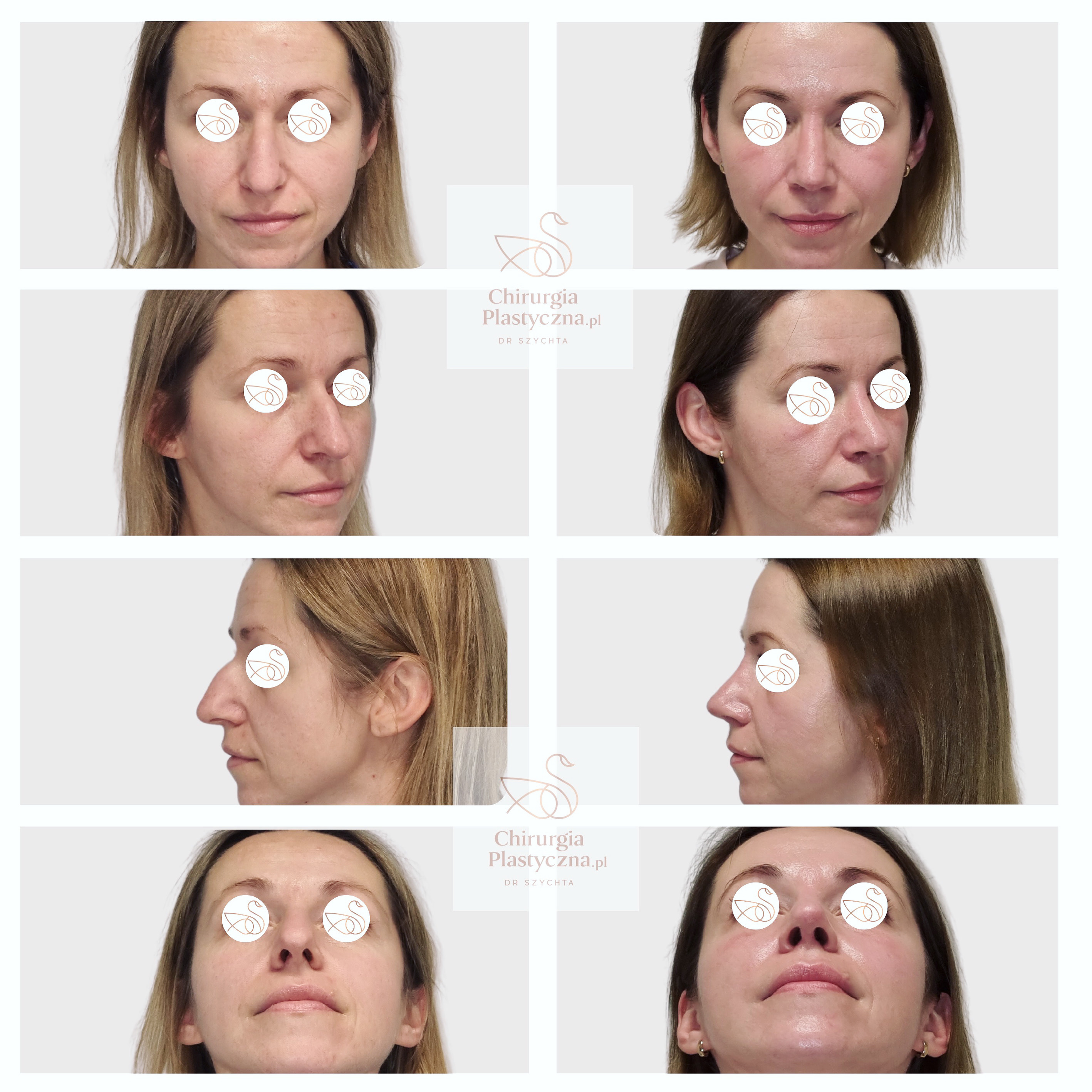
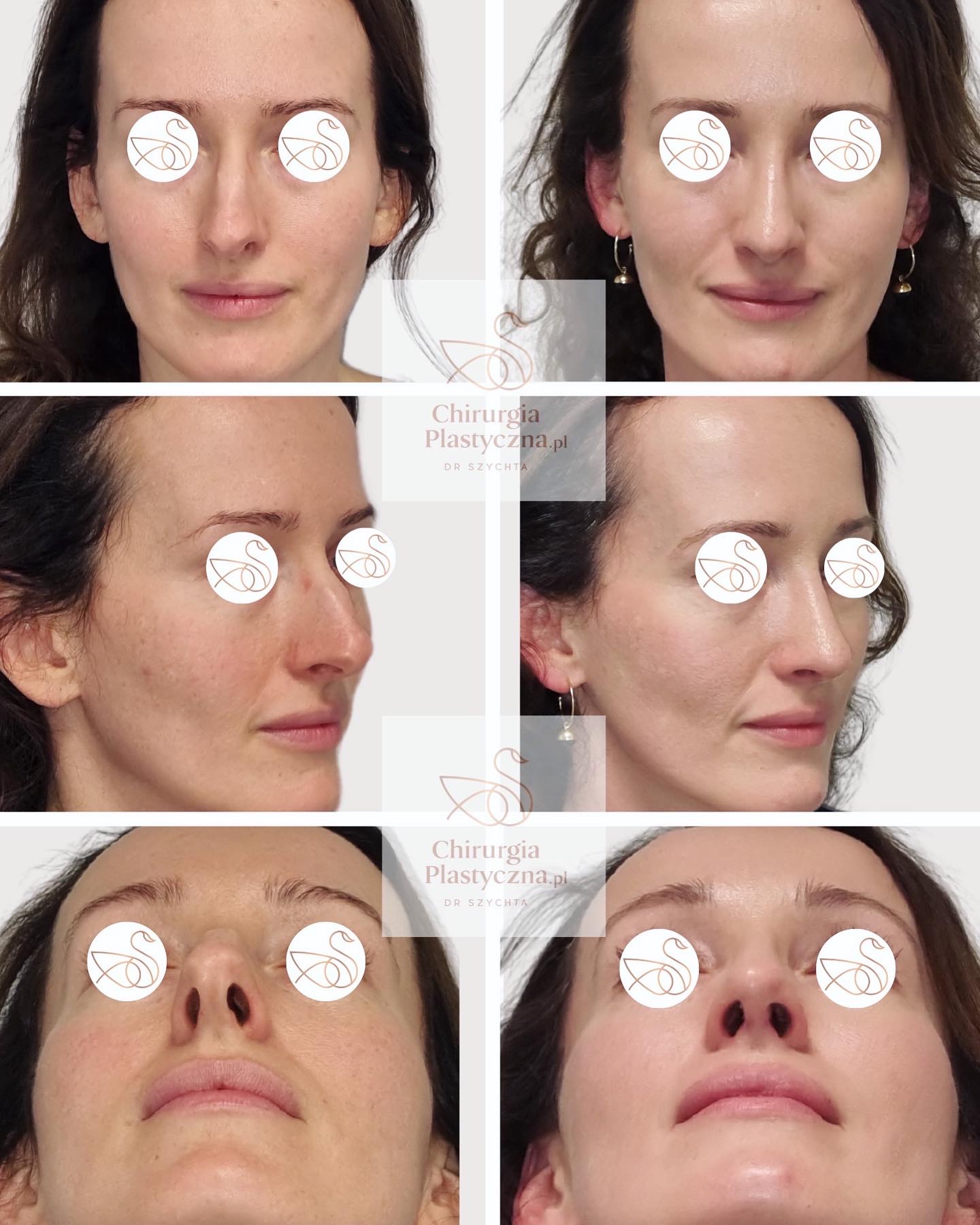
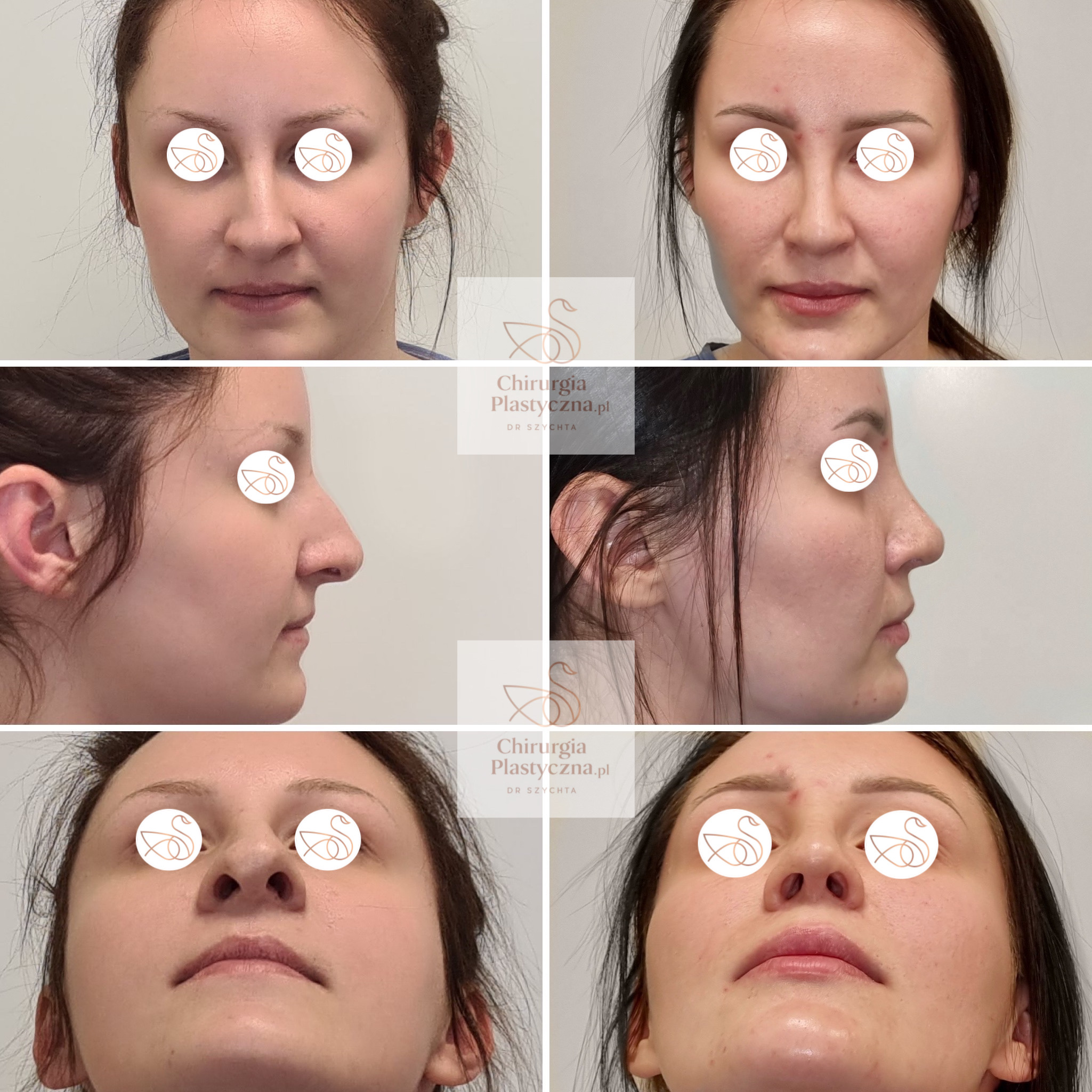
Surgeons often take advantage of open access that provides easier availability of nasal structures and facilitates efficient manipulation. A skin flap is separated from the osteochondral structure and the surgeon proceeds to shape the organ as planned. After the cartilage and bones are formed, the skin returns to its placement over the new nasal skeleton. The closed rhinoplastydoes not leave any scars and offers a high range of opportunities for modelling of the desired and natural shape of your nose.
Nasal skeleton can be modified with use of very wide range of approaches. In our practice, we use the whole spectrum of modern techniques, which are individually adopted to the specific distortion in each individual Patient.
Following the surgery, the incisions are stitched with thin surgical sutures. Some are absorbable, and the other stitches remaining on the skin are removed after about a week.
Nose can be a significant and most prominent asset of your face’s appearance as its location is so exposed and central. Among all areas of your face, it is of maximum importance to preserving harmony among its component parts. It happens to be a serious cause of complexes, however. Unfortunately, it is occasionally misshapen and too large. Humps, curves, substantial breadth or excessive size in proportion to the rest of your face draw unwanted attention. Stereotypes attribute some features of character to people with noses of specific shapes or sizes. Such perceptions have often been included in works of art and literature by means of colourful descriptions or caricatures. In the 15th century, Leonardo da Vinci himself analysed the ideal length of the nose in the Vitruvian Man and set its right proportions as a third of the face height. We believe at present there is no single perfect model of the organ. Its anatomy is extraordinarily diverse, like our natures and shapes of our faces. However, correct proportions and distances among the individual parts of a face, including the nose, make a face be seen as attractive. Not precise dependences between anthropometric features of a nose, but its harmony with the rest of a face is the key. Therefore, rhinoplasty is an enormous challenge to surgeons. When a procedure is planned, changes of nose shape and proportions, its improved functionality, as well as its overall matching to the remaining parts of a face are taken into consideration. The entire procedure requires a plastic surgeon to have anatomical experience of comprehensive nose reconstruction surgeries, accuracy and imagination coupled with the capacity for thinking in space and a sculptural gift.
Nose deformities can be innate, due to genetic conditions or intrauterine injuries. They can be also acquired: following injuries, accidents, diseases or inflammations. There are also purely aesthetic considerations. Rhinoplasty (or total nose correction) involves modifications to deformities of the external nose, thus remedying imperfections of bumpy, long, wide or too prominent noses (whose length and width are normal), a whole gamut of nose tip procedures of malformed alae. Depending on a desired nose shape, its cartilaginous or osseous parts are corrected. If the Patient has trouble breathing or their organ is not patent, a malformed septum or hypertrophied nasal conchae are corrected. Functional indications may prove key to improvements to the external nose as well.
Following a rhinoplasty, your nose takes on the dreamt-of shape and size and of course gains or preserves its normal function. It becomes an integral part of your face, which becomes harmonious and beautiful!
Preparation for your procedure:
Patients planning or expecting a surgery are requested to read ‘Guide for the Patient – preparation for your procedure’, available in the INFORMATION section.
Recommendations following a rhinoplasty:
- Stay at the clinic: in case of rhinoplasty under general anaesthesia, the Patient will remain at the clinic for 1-2 days;
- Dressing: Patients should apply cooling compresses of the nasal region for the first 2 days after the procedure. Wetting and pressing of nose thermostatic dressing are prohibited;
- Reduced mobility: don’t bow or move your head violently, lying with your head raised is recommended; limit your facial movements for a week after the surgery, a light diet is suggested, free from hard products that require long biting and opening your mouth wide, blow your nose very carefully and open your mouth when sneezing;
- Medication: the Patient can only take medication consulted with their doctor, take painkillers with caution, don’t use aspirin or other substances interfering with blood clotting;
- Other: Patients should avoid clothing put on over their head; you mustn’t have alcohol or drinks containing caffeine for 3 weeks; either corrective or sun glasses are prohibited for 6 weeks, while contact lenses may be worn 2-3 days after the surgery; you mustn’t go to a solarium, sauna or sunbathe for 6 months; high UV filter creams are recommended when sunbathing; no trauma to nose can be done, thus no sport activities are advised for 6 weeks
- Follow-up visits: Patients must attend follow-up visits arranged with their doctor.
Patients will be informed in detail about any recommendations following their procedures at the clinic.