Regain the shine in your eyes and emphasise their natural beauty and energy!

Lower blepharoplasty - plastic surgery of lower eyelids

I’m in my prime, full of energy and passion! Regretfully, my look doesn’t reflect it and fails to correspond to my interior! My eyes seem sad and tired. Hidden below my lids, they appear in search of calm and rest. I’ve got swollen lids and bags under my

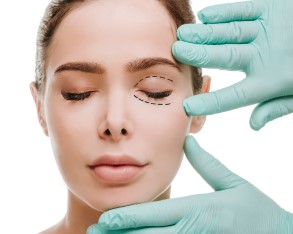
Plastic surgery of lower eyelids – also known as lower blepharoplasty – is a surgery designed to remove excessive flaccid and drooping skin and irregular accumulations of fatty tissue around your eye. Removal of bags from under the eyes, characteristic not only of the middle age but also appearing in young people, with highly adverse effect on the overall appearance of their faces, is another, extremely important part of the procedure. It is also intended to restore the Patient’s attractive youthful appearance, underline the beauty of their eyes, and improve comfort of seeing.

Details of your procedure

As part of a correction to lower eyelids, the plastic surgeon makes incisions in natural eyelid lines, under eyelashes, so that traces are concealed as well as possible. The distance between an incision and the ciliary line varies depending on the Patient’s age. This shouldn’t affect visibility of the incisions afterwards, however. It sometimes is extended just below a corner of the eye. An incision on the inner side of the lower lid, across the conjunctival sac, is an alternative to cutting along the ciliary line.

The standard procedure continues to excise excess skin, to shape fat, and to shift muscle. Only in exceptional circumstances does the surgeon excise some of the muscle. The lower eyelid skin, once partly reduced, is appropriately tensioned and the eyelid is formed. The fat pad is shaped very precisely in a way that will prevent the impression of sunken eyes. Eye socket fat or muscle are normally not removed in young people.

Surgical incisions are sewn with very fine surgical sutures, removed after a week. As an alternative, absorbable sutures are used that vanish in the process of healing and don’t have to be removed.

Final effects of the lower blepharoplasty can be appreciated after up to 3 months. The process of healing can take even 2 years.

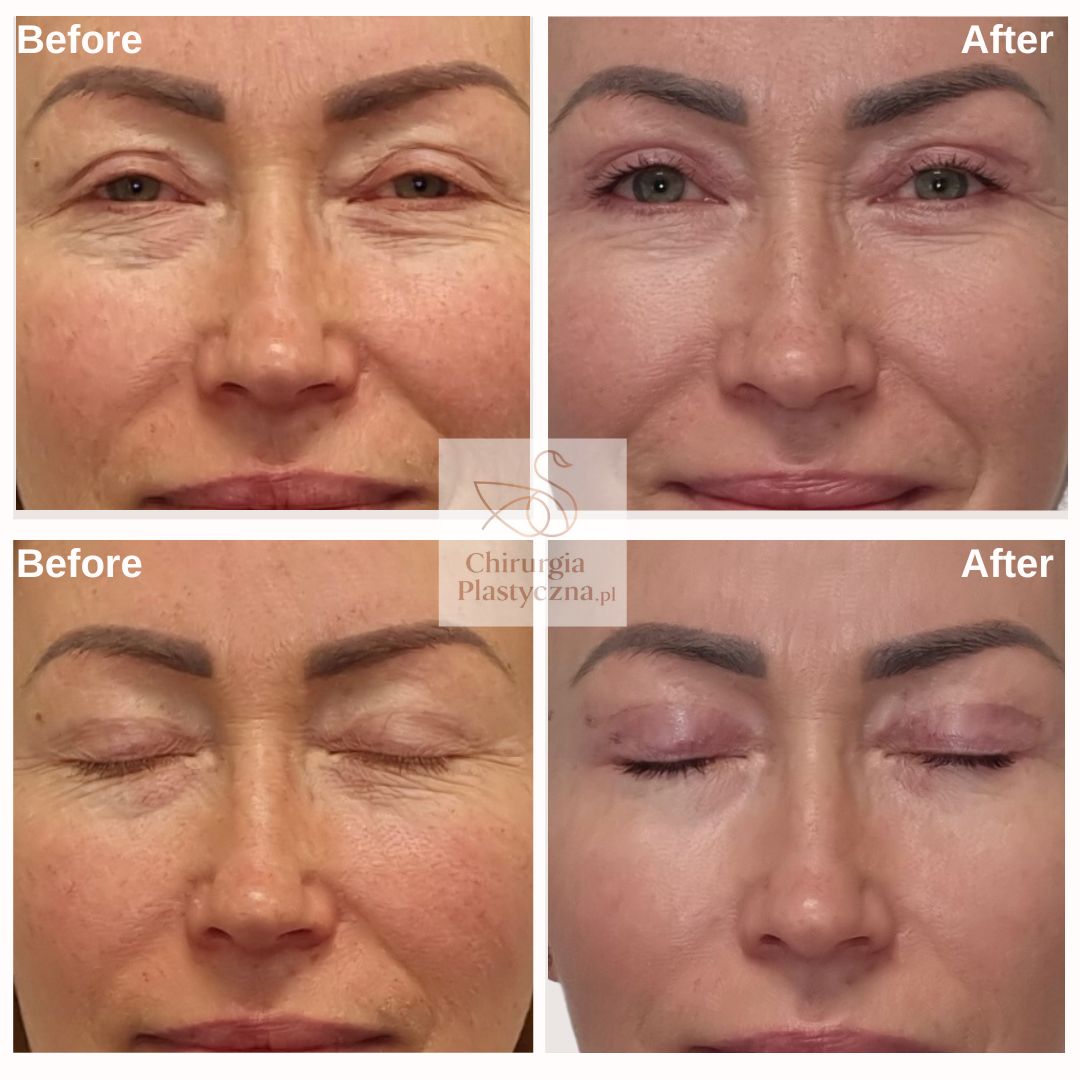
The lower blepharoplasty distinctly rejuvenates the eye region. Your eyes gain their former shine and seem more joyful and fuller of energy. Plastic surgery of the lower eyelid is not a solution to all aesthetic issues around your eyes, unfortunately.

Possible shades under your eyes, wrinkles in the eye corners or a drooping upper eyelid will require more procedures. Properly designed and executed operations in the region of your eye sockets can produce an improved overall effect of a younger face compared to results of a face, forehead or neck lifting itself.

Preparation for your procedure:

Patients planning or expecting a surgery are requested to read ‘Guide for the Patient – preparation for your procedure’, available in the INFORMATION section.

Recommendations following a lower blepharoplasty:

  • Stay at the clinic: following local anaesthesia, the Patient will be able to return home on the very same day;
  • Dressing: dressing is not normally applied following the blepharoplasty, it’s only used in case of insufficient eyelid issues;
  • Reduced mobility: a sparing lifestyle and relaxation are recommended; the Patient should lie with their head raised; don’t drive after your surgery, avoid stooping, lifting burdens, and practice of sports for 2 weeks;
  • Medication: antibiotics are not usually administered after the procedure; the Patient takes drugs agreed with their doctor, if needed; if eyelids fail to close, eye moisturising drops are recommended;
  • Other: wear sunglasses for the first few days after your surgery to protect your eyes from light and wind and to limit blinking; cooling compresses to the eye region are recommended as well; you mustn’t go to a solarium, sauna or sunbathe for 6 months; protect your eyes from the sun;
  • Follow-up visits: Patients must attend follow-up visits arranged with their physician.

Patients will be informed in detail about any recommendations following their procedures at the clinic.

More

Frequently asked questions:

Candidates for the lower eyelid surgery often describe their issues as the so-called ‘bags’ under their eyes. They are partly a component of the inevitable process of ageing and relate to oedema, that is, excessive accumulations of fluid. Predisposing factors can also be hereditary. As we age, the skin in this region becomes visibly thinner, the surrounding muscles weaken and fascia are extended, which makes fat pads under the changed skin more manifest.

If both your upper and lower eyelids need correcting, the two surgeries can be part of a single procedure. You need to remember, however, recovery will take a little longer if the procedure is combined or complex. The overall effect of the eye region’s rejuvenation will be more spectacular, on the other hand.

Scars should not be seen as incisions are made at natural wrinkles of your eyelid skin. Thus, traces of the incisions are concealed in a very natural way. If the surgery is conducted across the conjunctival sac, the issue of visible scars is not applicable at all.

I’m afraid not. Surgical removal of redundant skin is the sole option. In order to improve appearance of the eye socket region, a range of aesthetic medical procedures can be employed. In consultation with the Patient, the plastic surgeon will determine best methods of treatment.

There is no rule. Cool compresses are recommended following the surgery as prevention. Swelling may of course arise. It disappears in time, given proper care, though.

Your eye may seem ‘tired’ and oversensitive to light in the first days after your surgery. However, after this inconvenience recedes, the Patient should see better as their field of vision has expanded by removing excess eyelid skin.

It’s long-lasting. However, there’s a risk of recurrent excessive tissue that may require another blepharoplasty. A decision to go for another procedure should be thoroughly weighed, since a secondary surgery at this location is extremely difficult and demanding.

Recovery after the procedure normally takes about 2 weeks and is a little longer than in the case of the upper eyelid surgery. You can easily return to work after then. If the Patient does manual work, a longer rest is recommended.

Glasses for a few days after rhe surgery, until swelling recedes, are recommended to those using contact lenses to improve their vision. Lenses may additionally irritate your eyes.

Every surgery entails the risk of complications. The Patient will be informed about general complications and those specific to this procedure at a qualifying medical appointment after their health condition is reviewed.

Information about the procedure:

Duration

About 1h

Anaesthesia

Local

Stay at the clinic

For the duration of the surgery

Suture removal

Non-absorbable sutures are removed on the 7th day after the surgery

Effect of the surgery

Lasting, fully manifest after a few months

Contraindications

Pregnancy or breastfeeding, hypertension/ diabetes issues, dry eye syndrome, uncontrolled arterial hypertension, glaucoma, retinal ablation

Expert

Get to know
our Expert better

Check