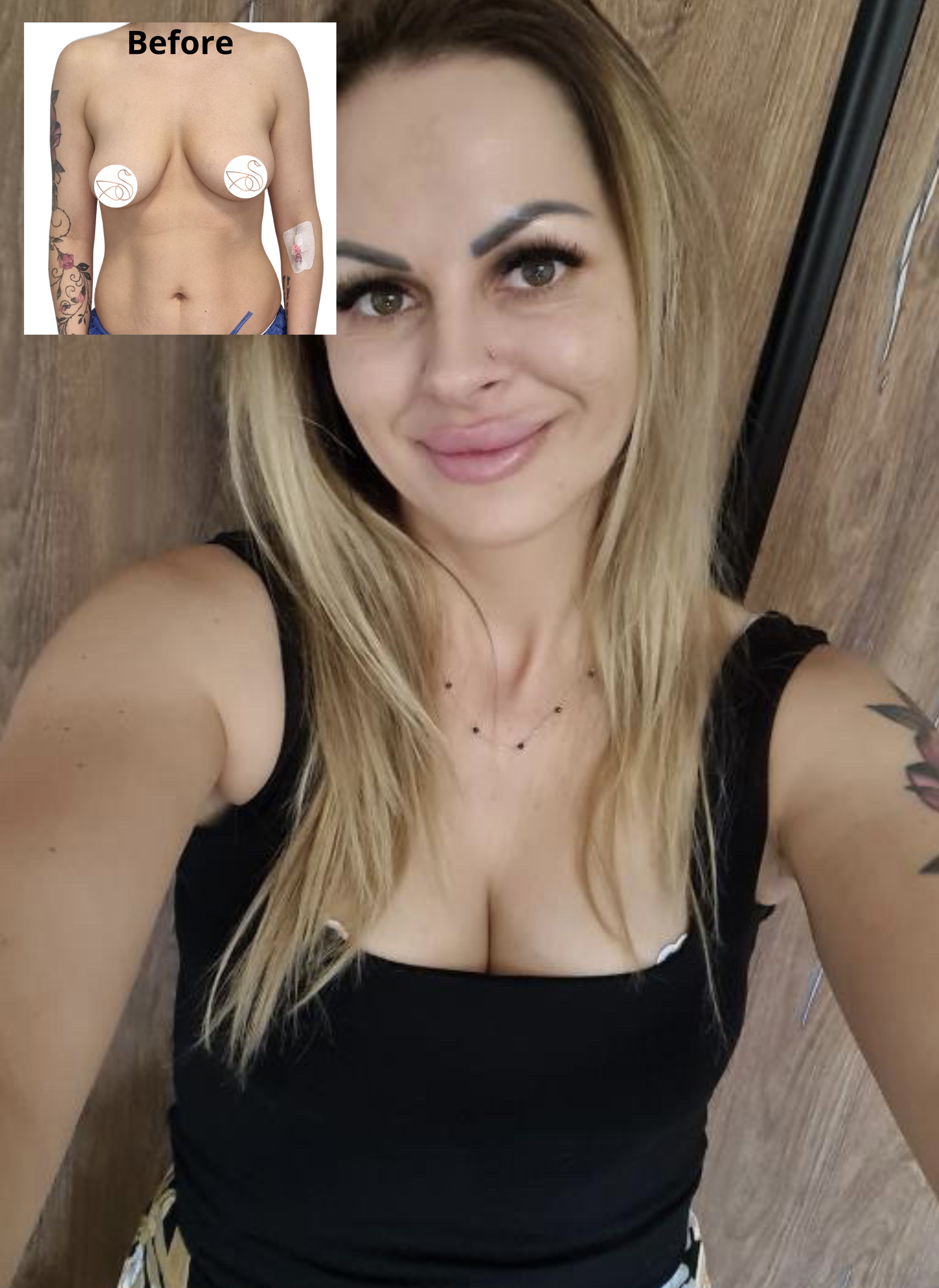
Lifted, shapely breasts and a new, comfortable life!

Breast reduction (and lifting – mastopexy)

Many women dream of beautiful, ample breasts, identifying them as attributes of femininity that emphasise their attractiveness. However, overabundant breasts are no longer sources of joy for many Ladies. They’d be happy to have smaller, more shapely, and

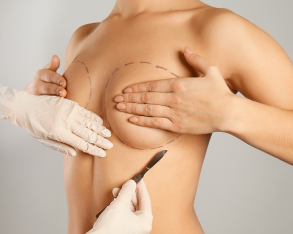
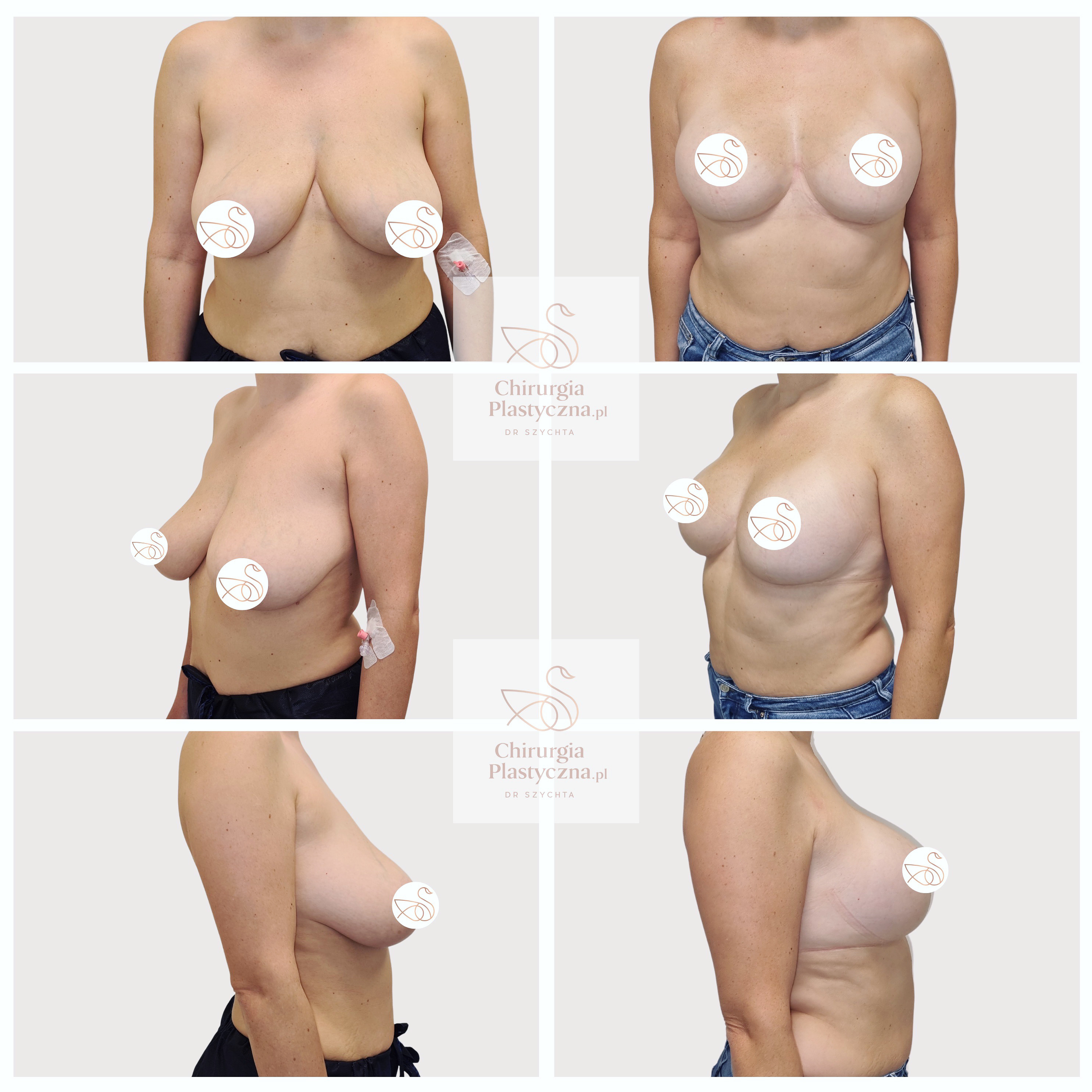
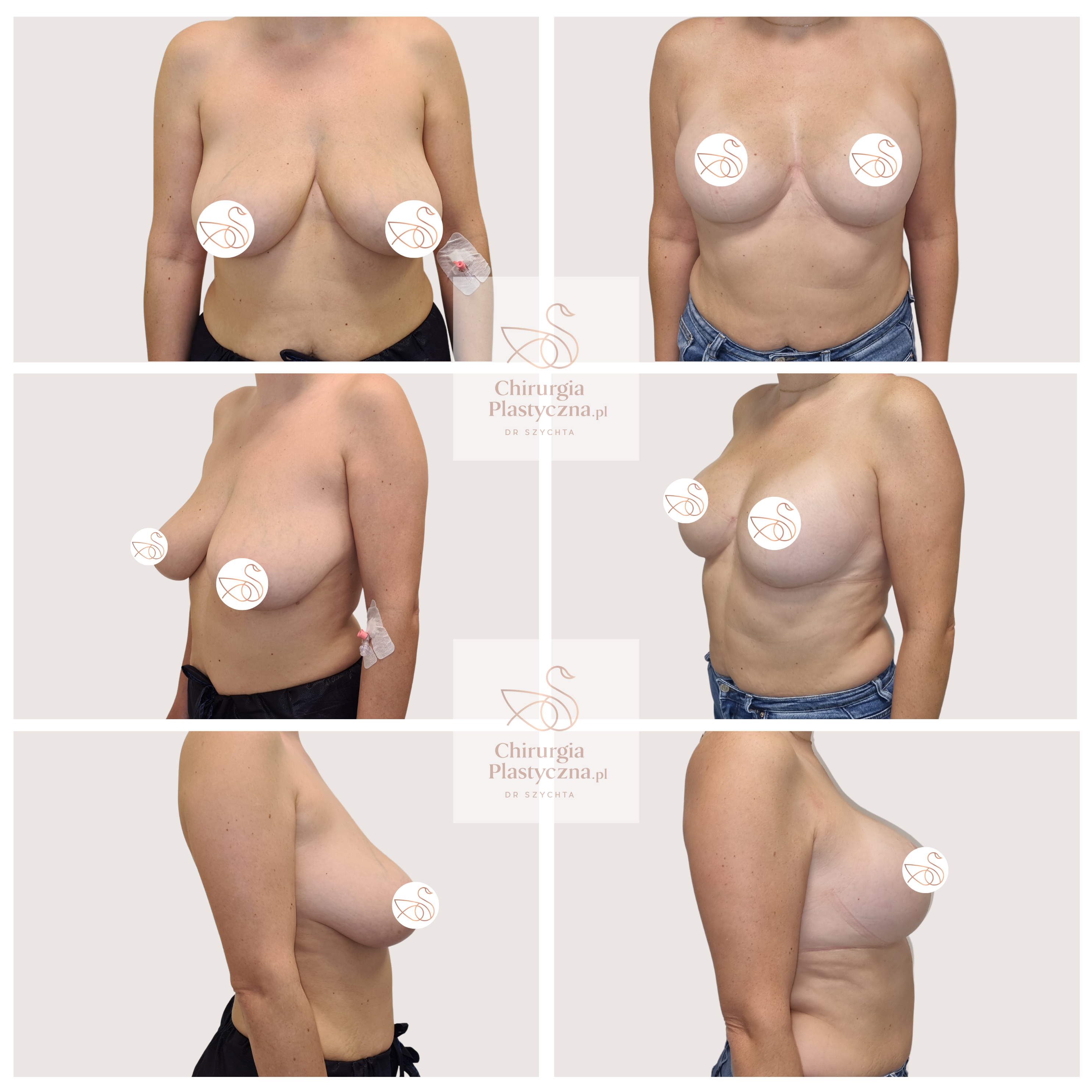
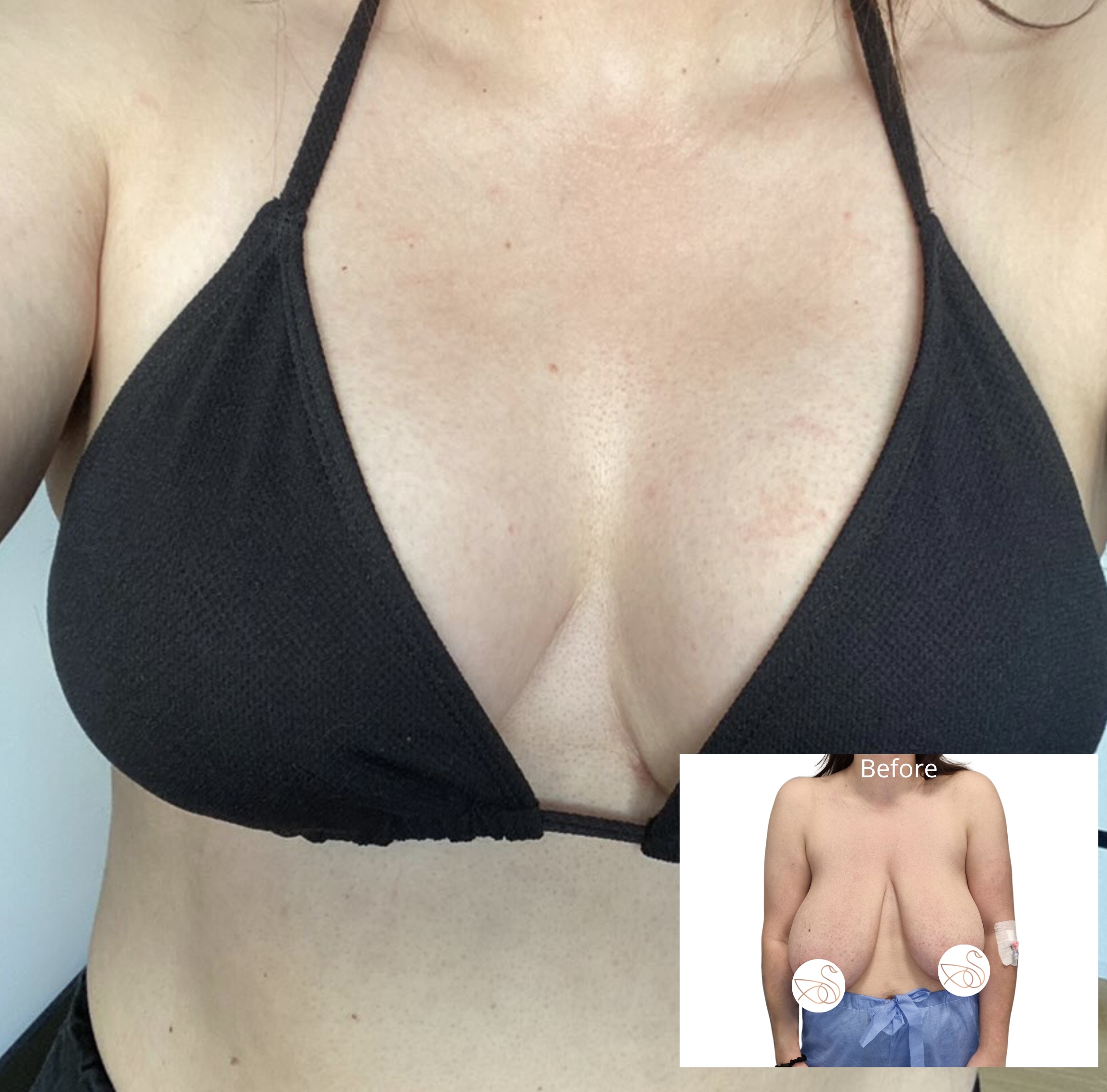
Breast reduction and lifting, also known as reduction mammoplasty, is a surgery designed to reduce weight and volume of breasts by removing part of an overgrown mammary gland, fatty and subcutaneous tissue, and excess skin from this part of the body. It also involves an appropriate forming and shaping of cleavage. In parallel, the procedure is intended to remedy spine pains caused by an overabundant and heavy breasts.

Details of your procedure

Mammoplasty is a procedure that consists in shaping of mammary parenchyma and removal of its excess volume. Operating techniques are selected as appropriate to breast size and expected results.

The very wide range of state-of-the-art techniques, medical experience of the variety of aspects of breast treatment, and choice of an appropriate treatment protocol all help to form a pleasing cleavage from virtually any starting point.

Regardless of the technique itself, the plastic surgeon most often leaves a scar around the nipple, a vertical one below, and occasionally one more concealed along the inframammary fold. The surgery provides for a very broad range of breast tissue shaping and removal of substantial excess volumes. Surgical incisions are sewn with fine surgical sutures and the stitches are removed after about two weeks.

Large breasts have for ages been seen as crucial feminine assets of a healthy woman and a mother capable of nursing a number of progeny. In the contemporary world, large and shapely breasts are still desired by many women not naturally endowed in this department. Ladies with large breasts may seem fully happy with this bounty. An advantage of some may become a burden to others, however. Excessively endowed females often have problems with active lifestyles. They are afflicted with recurrent inflammations of the skin, unable to ‘breathe’ freely, particularly below their breasts. Largish breasts make exercise and running uncomfortable and require appropriate clothing, which is commonly a problem. A big and heavy bosom may cause pains of the thoracic spine, neck, and shoulders. The mental aspect matters to considerations of an ideal breast size, too. Women frequently have abundant breast complexes and try to conceal it under loose clothing, and often stoop walking.

It is accepted one breast should weigh no more than 500 g. No ideal weight model exists, though, like there is no single ideal of breast size or appearance. The weight and thus the size should match a given person’s figure. There are breasts weighing as much as 3 kilogram. They quickly begin to droop and become misshapen as a result.

Causes of abundant breasts are not always specific. Genetics, hormone balance, and overall body weight are assumed to influence breast size.

Breasts should be attractive to their owner without making her life inconvenient in any respects. This is the Patient who will choose her size and shape, her preferences will determine selection of surgical techniques.

Following a mammoplasty, the Patient gets a smaller, lighter, more shapely, proportionate, and symmetrical cleavage. Not only the new aesthetic experience is to be enjoyed. The discomfort of back and neck pain is no longer felt. The surgery also has an enormous effect on a woman’s posture. She finds it easier to stand straight without the excessive loading, to exercise or run. Patients not only gain a more attractive figure but also feel more beautiful in general, grow more energetic, and get rid of their complexes.

Preparation for your procedure:

Patients planning or expecting a surgery are requested to read ‘Guide for the Patient – preparation for your procedure’, available in the INFORMATION section.

Recommendations following a breast reduction:

  • Stay at the clinic: the Patient remains at the clinic for 1 or 2 days;
  • Dressing and special clothing: wear a protective, specially fitted bra for 8 weeks after your procedure;
  • Reduced mobility: you should sleep with your head and arms raised following the procedure; lie only on your back for the first 3 days, you may also sleep on your side for the next 2 months, but mustn’t lie on your stomach; you mustn’t lift your arms high (above the breast level), you should avoid violent movements or lifting of heavy things for the first 2 weeks after your procedure; you can take up sports and exercise again after 2 months, though only on consultation with your doctor and if they don’t cause pain in the breast region;
  • Medication: the Patient can only take medication consulted with her doctor; she mustn’t take aspirin or other drugs interfering with blood clotting;
  • Other: breast massaging is allowed a week after your procedure at the earliest; you mustn’t go to a solarium and sauna or sunbathe for at least 6 months, a high UV filter cream is recommended when you sunbathe;
  • Follow-up visits: Patients must attend follow-up visits arranged with their doctor.

Patients will be informed in detail about any recommendations following their procedures at the clinic.

More

Frequently asked questions:

The procedure of breast liposuction is an alternative to mammoplasty. However, this technique can’t be applied to all Patients. Have a consultation to discuss available techniques of breast reduction.

Women with a natural overabundance, who grapple with a range of functional issues like spine, neck, and shoulder pains or skin lesions below their breasts, are the perfect candidates for the breast reduction procedure. The question is not limited to functional considerations, though. Ladies with large breasts may simply feel bad and embarrassed and come to our clinic as a result.

The reduction should not be undertaken before you’re 20, as breast procedures produce best results on fully shaped breasts that have already reached their final size. Mammoplasty is not recommended to women with keloid tendencies. Ladies who think of a breast reduction should be at least 6 months after the end of lactation and preferably not planning to have another baby.

As a rule, the effects are permanent. Given significant weight variations, however, breasts may lose their firmness, shape, and proper position or expand its volume as too much weight is put on. In order to preserve the desired effect of the surgery, a healthy lifestyle and physical activity are encouraged, bringing benefits not only to your bosom but to your whole body as well.

There’s no single answer to this question. Normally, if appropriate surgical techniques are selected, the Patient can keep potential to breastfeed. It may be impossible, however, following a substantial breast reduction. You should mention your family and breastfeeding plans at your qualifying interview.

Breasts are usually swollen and may seem unattractive for a few days or even weeks after the surgery. As the discomfort passes, though, the Patient will be able to enjoy first visible effects of the procedure. The overall post-operative process of breast forming takes even several months.

Every surgery entails the risk of complications. The Patient will be informed about general complications and those specific to this procedure at a qualifying medical appointment.

The procedure is not associated with an increased risk of neoplastic lesions in this part of your body. A possible risk of such conditions in the Patient is decided by other factors, e.g. genetic load, your life environment or your diet. Nonetheless, cancer-oriented testing should be carried out some time after the procedure, anyway advisable as part of prevention by women who look after their health.

Mammography or breast US-scan are occasionally difficult in Patients with thick, hard keloid scars after surgeries. Scars may interfere with proper reading of diagnostic images. This is a rare situtation, however.

Yes, it will depend on your preferences and suited to your figure.

Information about the procedure:

Duration 

2-3 h

Anaesthesia 

General

Stay at the clinic

1-2 days

Suture removal

14 days after the surgery

Effect of the surgery

Long-term, fully manifest after 6-12 months

Contraindications 

Pregnancy or breastfeeding, hypertension or diabetes issues, some skin conditions in the breast area

Expert

Get to know
our Expert better

Check