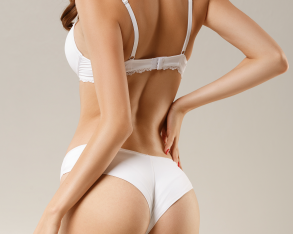
As part of liposuction, the surgeon makes fine incisions in the Patient’s skin, through which excess fatty tissue is broken and then suctioned by means of a special device. In order to evenly distribute the remaining tissue, the specialist shapes the procedure location. From 1 to even 3 litres of fat are removed on average in a single liposuction. The quantity depends on location and volume of the tissue accumulated in the Patient’s body. Duration of a liposuction depends on body region, fat excesses, and of course the type of technique applied.
The incisions are sewn with fine sutures that are removed after 1 week. Absorbable sutures are an alternative: absorbed in the process of healing, they needn’t be removed.
Patients should realise liposuction is not a substitute for slimming and serves to shape your figure. It can be undertaken as a single surgical procedure. Some other procedures are conducted in some Patients in parallel with the fatty tissue removal, however, to emphasise advantages of their bodies, fill wrinkles, remove excess skin or shape buttocks. Effects of combined procedures are more spectacular and remedy more imperfections, yet require longer recovery and entail a greater risk of complications.
Liposuction can be conducted by means of diverse techniques. They differ in ways of cannula operation with which fatty tissue is removed and in the end results.
As part of the standard liposuction, cannulas connected to a vacuum apparatus are inserted in the Patient’s body via small apertures. The surgeon moves a cannula forwards and back to harvest the fat. Redundant tissue is then removed by the suction force of the liposuction apparatus. This technique requires substantial commitment and strength of the plastic surgeon.
Nutational ultrasound liposuction (N.I.L.) is defined by nutational cannula movement in 3 directions, which looses the tissue, so that the surgeon is not forced to press the cannula to harvest the material. Following a properly executed N.I.L (like in the case of WAL), locations of fat harvesting are smooth and even. In addition, this process of fatty tissue removal may be a little less painful to the Patient both during the procedure and the recovery. However, cell viability of harvested fat can be diminished.
Water assisted liposuction (WAL) removes fat by means of a water jet or, to be more accurate, a sterile solution including saline, lidocaine, and adrenaline. The solution introduced through a cannula atraumatically separates the tissue and anaesthetises the area of the procedure with the lidocaine. Adrenaline, meanwhile, considerably constricts blood vessels, thereby reducing bleeding. ‘The water’ and the swollen fat are not accumulated in the body but promptly removed with another cannula. The risk of swelling and oedema in the WAL is lower than in the traditional techniques.
Fatty tissue harvested from the Patient is not necessarily a redundant material fit for disposal only. Once rightly prepared, the fat can serve as a natural and safe filler necessary for a procedure known as lipofilling – the fatty tissue transplant which involves shaping of certain body regions. Put simply, lipofilling is nothing but moving fatty tissue from one place to another. It is designed to limit symptoms of facial or hand ageing, to shape and emphasise strengths of other body areas like breasts or buttocks by expanding or reconstructing them.
Preparation for your procedure:
Patients planning or expecting a surgery are requested to read ‘Guide for the Patient – preparation for your procedure’, available in the INFORMATION section.
Recommendations following a liposuction:
- Stay at the clinic: the Patient remains at the clinic for 1 day;
- Dressing and special clothing: pressure clothing is recommended for the first 6 weeks of recovery both during the day and at night;
- Reduced mobility: a sparing lifestyle for a minimum of 2 weeks following the procedure; remember to limit lifting of heavy things; you can gradually resume sporting activities after 2 months and on consultation with your doctor;
- Medication: Patients can only take drugs agreed with their doctors; antibiotics are recommended in case of a very extensive liposuction;
- Other: a light diet; massage the operated location 3 times a week for 2 months, beginning about a week after the surgery; smoking, drinking alcohol or caffeine drinks is prohibited for a minimum of 3 weeks following the procedure; Patients cannot sunbathe or go to solarium for 6 months after their surgery;
- Follow-up visits: Patients must attend follow-up visits arranged with their doctor.
Patients will be informed in detail about any recommendations following their procedures at the clinic.