The procedure involves a 5-7 cm long incision below the Patient’s knee. A pocket is carefully prepared for an implant and one or two prostheses are inserted. After their correct positioning and accurate shaping, multiple tissue layers are sewn together with absorbable or standard surgical sutures.
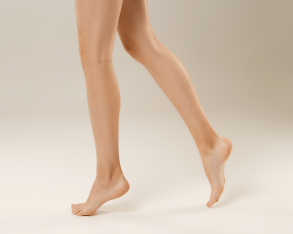
Much has been said and written about physical attractiveness and canons of beauty. Whether we want to or not, we look at others and subconsciously evaluate their appearance. We pay attention to the face, hands, chest, as well as legs. Women like sporty, well-sculpted male thighs and muscular calves. Men, meanwhile, take note of slim, slender, and long legs of the fair sex. A number of studies have been conducted to define model calves with a perfect shape and right proportions. The female lower leg is regarded as attractive where the thigh, knee, and ankle form a straight line and the inner calf outlines a slight, yet distinct arch. The male calf should be more massive and muscular in its upper section.
Appearance of a leg below the knee can be improved with both regular exercise and surgical procedures. Patients decide to undergo a surgery or, more precisely, implantation mainly for aesthetic reasons, when they are dissatisfied with the size and asymmetry of their calves or suffer from deformities caused by illnesses or accidents.
Calf implants have a highly natural structure and come in a number of sizes and shapes. They are customised to make up a harmonious whole with other parts of the limb and emphasise strengths of both male and female legs. It is men who account for more Patients taking advantage of calf surgeries.
Prostheses are anatomical or spindle-shaped. The anatomical implants are asymmetrical broader in their upper part. Once implanted, they look like a properly shaped muscle developed with adequate exercise. It’s men who order them most often. Spindle-shaped prostheses are the other type of popular implants, symmetrical and thinner than anatomical implants. They are commonly applied to women who dream of having slender calves. They’re also implanted in Patients with leg tissue defects and are perfect for shaping the lower and medium calf sections.
Depending on purpose of a surgery, implants can be placed on the inner or outer calf side or on both at the same time. The prostheses are made of diverse forms of silicone. Solid silicone or silicone gel implants are used most frequently. The prostheses are placed subcutaneously, just beneath the fascia or within the calf muscle. The first technique of implant placement is less invasive, therefore, recovery is faster. However, a prostheses may shift in this solution. Implantation under the muscle is a more complex procedure as it requires deeper and more accurate incisions. Following this surgery, the Patient recovers longer, but the implant is more securely placed in the muscle and the final aesthetic effect is better.
Effects of a calf surgery can be noted promptly following the procedure. Hoever, the operated location will be swollen and red, bruising is possible, too. These inconveniences should recede a dozen days after the procedure. That will be a good moment for assessing the end result of the surgical intervention.
The calves look very natural after the procedure while their shape depends on the type of implant. The female calf becomes symmetrical and slender. Men, on the other hand, get more solidly built upper calf sections that look like properly and naturally shaped muscles.
Preparation for your procedure:
Patients planning or expecting a surgery are requested to read ‘Guide for the Patient – preparation for your procedure’, available in the INFORMATION section.
Recommendations following a calf implantation:
- Stay at the clinic: the Patient remains at the clinic for 1-2 days;
- Dressing: dressing shouldn’t be wetted and a first shower can be had after the dressing is removed; pressure knee socks are recommended after the procedure;
- Reduced mobility: the Patient should lie with raised legs as much as possible, though walking is also recommended; take special care of and spare your legs without straining them for at least 3 weeks; avoid hard labour for about 5-6 weeks;
- Medication: the Patient can only take drugs consulted with their doctor; antibiotic therapy is recommended; aspirin or any other medication interfering with blood clotting must not be administered
- Other: you mustn’t drink alcohol, smoke or consume drinks containing caffeine for at least 3 weeks after your surgery; you mustn’t go to a solarium, sauna or sunbathe for 6 months; a high UV filter cream is recommended;
- Follow-up visits: Patients must attend follow-up visits arranged with their doctor.
Patients will be informed in detail about any recommendations following their procedures at the clinic.