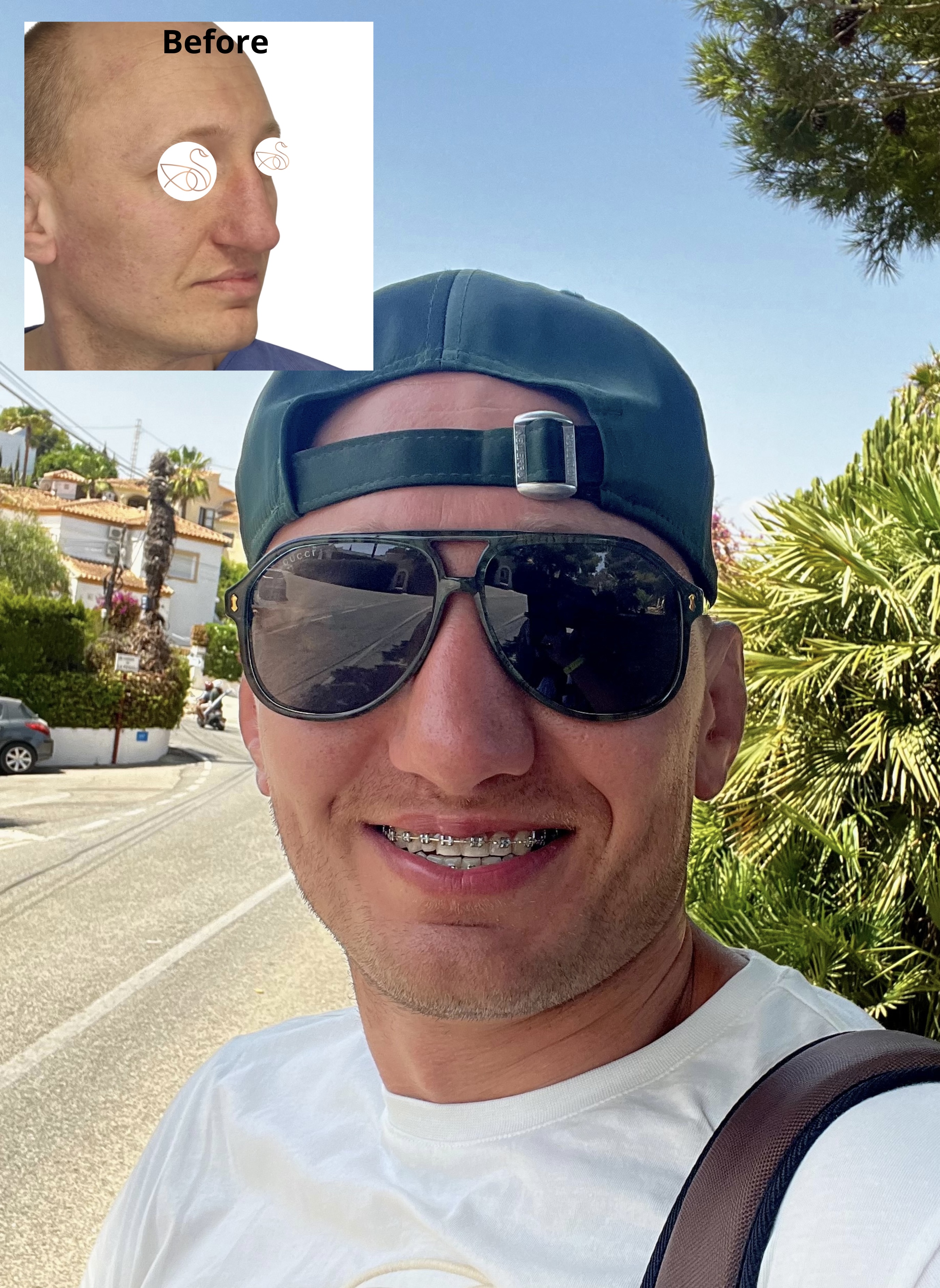
Secondary rhinoplasty and nasal reconstruction are performed to correct various deformities that may result from previous surgeries or trauma. These deformities can range from cosmetic issues such as asymmetry, irregularities, or collapsed nasal contours, to functional problems like obstructed airways or nasal valve collapse, leading to difficulty breathing. The primary goal of secondary rhinoplasty is to restore both the aesthetic harmony of the nose and its structural integrity, ensuring improved breathing functionality. Achieving these goals often requires the use of cartilage grafts to rebuild the nasal framework and provide lasting support.
Cartilage grafts are commonly used in nasal reconstruction, especially in cases of secondary rhinoplasty, to rebuild the damaged or deformed nasal structure. Cartilage can be harvested from several areas of the patient’s body, including the nasal septum, ear, and rib. Each of these graft sources has its unique applications, but rib grafts offer the greatest surgical possibilities, making them far more versatile compared to other methods.
- Septal cartilage grafts – Cartilage from the nasal septum is often the first choice as it is easily accessible and provides sufficient strength to correct minor deformities. However, in cases of previous surgeries, the septum may already be depleted or too weakened to serve as a reliable graft source.
- Ear cartilage grafts – Cartilage from the ear (auricular cartilage) is flexible and thin, making it ideal for smaller corrections, such as rebuilding the nasal tip or wings. However, the limited quantity and lack of structural strength make it less suitable for more complex nasal reconstructions.
- Rib cartilage grafts – Rib cartilage grafts represent the most advanced technique used in nasal reconstruction, particularly in challenging cases of secondary rhinoplasty. Rib cartilage offers a large amount of material that can be sculpted to meet the patient’s specific needs, allowing for the reconstruction of both the shape and function of the nose. Its strength makes it indispensable in rebuilding more complicated deformities or in cases where there has been significant loss of nasal structure. Rib grafts can be used to reconstruct the nasal bridge, septum, and tip. Additionally, they allow the surgeon to shape the graft with high precision, offering maximum control over the final outcome.
Preoperative Preparation
Patients preparing for secondary rhinoplasty should undergo a thorough consultation, including an assessment of the nasal condition after previous surgeries, medical documentation review, and a detailed discussion of the patient’s expectations. It is crucial for patients to have realistic expectations about the outcome, as in many cases, the goal is to improve both function and aesthetics rather than achieve an "ideal" nose. Additional examinations, such as a CT scan of the nose, may sometimes be recommended to better understand the internal structure.
Postoperative Care
The recovery period after secondary rhinoplasty may be longer and more demanding than after a primary nose surgery, mainly due to the increased invasiveness of the procedures. Patients are advised to avoid physical exertion, keep the nasal mucosa well-hydrated, and attend regular follow-up visits to monitor the healing process. Rib grafts, while offering excellent results, may require a slightly longer healing period at the donor site. Patients may experience stiffness in the nose for several months, which is a natural effect of the graft, but over time the nasal structure softens and adapts to its new shape.
Nasal reconstruction after previous surgeries is a complex process that requires not only the surgeon’s advanced skills but also the patient’s full commitment to the healing process.