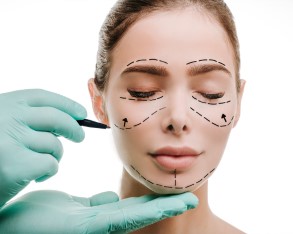
To correct everted eyelids, the plastic surgeon can use a range of techniques depending on place of the dysfunction, degree of its intensity, and causes. An operation normally involves removal of part of an eyelid (muscle, conjunctiva, tarsus, and skin). Treatment of scarring ectropion will require loosening of scars and a skin transplant. Eyelids everted following a facial paralysis may entail a greater number of more complicated surgical procedures.
Stitches are necessary following a surgery. Very thin surgical sutures are used, removed after a week. As an alternative, absorbable sutures are used that vanish in the process of healing and don’t have to be removed.
Everted or inverted eyelids much more often affect the lower than the upper eyelid. The eversion can arise all along an eyelid or only in its parts: middle, side or paracentrally. These irregularities compromise orbit protection, with the eyeball more liable to a range of conditions. In turn, inverted eyelids lead to irritation to cornea.
Everted eyelids can be native or may arise at various stages in life. Atrophy of the orbicularis oculi muscle, a mechanical trauma, scars post surgeries or burns in the eye socket region are possible causes. Ectropion can also be due to paralysis of the 7th facial nerve. The condition also occurs in those with chronic eye allergies who continue rubbing and stretching their eyelids.
In most cases, though, it affects the elderly as a result of ageing and flabbiness of the structures supporting the eyelid, that is, weakening of tendons and muscles. The condition may progress gradually. To begin with, the biliary margin is lowered and the sclera (a protective layer between the eye and its orbit) is uncovered. An eyelid proceeds to evert paracentrally then. Loosening of a skin fold continues and affects the whole biliary margin at the next stage of the condition.
Ectropion is not only an aesthetic issue as it leads to a range of afflictions within the eye socket. Patients suffer from excessive lachrymation, burning in their eyes, various inflammations or impaired vision. Added to all that, the eye can run dry and eyelids can become insufficient. Effective treatment will require surgical intervention. Owing to the procedure, the Patient’s eyelid border is correctly positioned, adheres to the eyeball, and thus the eye protection is restored. What is more, ophthalmologic problems caused by everted eyelids recede and the vision becomes more comfortable. The aesthetic effect shouldn’t be ignored, either. The Patient can enjoy a more attractive appearance of the eye region that gets visibly rejuvenated.
Preparation for your procedure:
Patients planning or expecting a surgery are requested to read ‘Guide for the Patient – preparation for your procedure’, available in the INFORMATION section.
Recommendations following an everted eyelid correction:
- Stay at the clinic: the Patient will remain at the clinic for a few hours and return home on the same day;
- Dressing: post-operative dressing is normally applied to retain eyelids in their natural positions;
- Reduced mobility: a sparing lifestyle and relaxation are recommended, the Patient should lie with their head raised; avoid stooping, lifting burdens, and practice of sports for 2-3 weeks;
- Medication: antibiotics are not usually administered after the procedure; the Patient takes drugs agreed with their doctor, if needed; your eye may need moisturising and cooling compresses may be placed on swellings;
- Other: wear sunglasses for the first few days after your surgery to protect your eyes from light and weather factors and to limit blinking; you mustn’t go to a solarium, sauna or sunbathe for 6 months;
- Follow-up visits: Patients must attend follow-up visits arranged with their doctor on an individual basis.
Patients will be informed in detail about any recommendations following their procedures at the clinic.