

Natural beauty
Aesthetic medicine
Non-invasive beautifying procedures and correcting imperfections

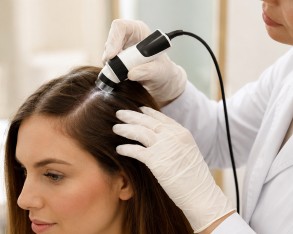
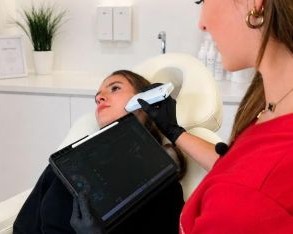
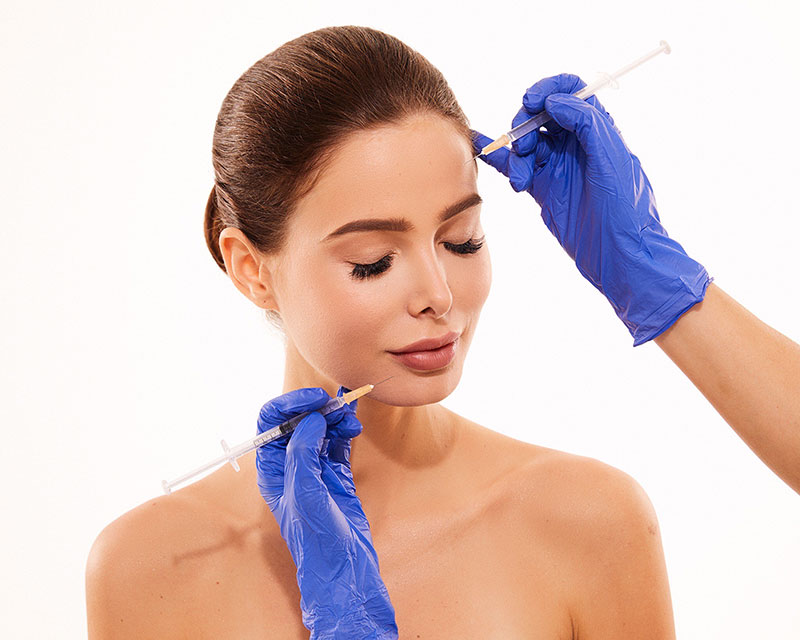
Aesthetic medicine is a discipline aimed at emphasising Patients’ natural beauty with a variety of beautifying procedures and correcting imperfections that don’t require invasive plastic surgery techniques. Although it was in the main limited to remedying skin defects to begin with, it is currently offering a number of procedures delaying first effects of skin ageing and improving its condition or correcting existing aesthetic shortcomings. It focuses on liquidating wrinkles and cellulite, smoothing scars or removal of redundant fatty tissue. Aesthetic medicine also shapes and refines the face, mouth or hands. It becomes increasingly popular and its potential of improving attractiveness continues to expand.
Origins of aesthetic medicine are impossible to trace. If we assume it began with the multiple beautifying procedures applied in ancient Greece, Egypt or Rome, the field would be even several millennia old. It was only in France in the 20th century, however, that the first Society of Aesthetic Medicine was founded by Jean Jacques Legrand, a pioneer of the discipline.
In Poland, aesthetic medicine started gaining popularity in the 1990s, when the Aesthetic Medicine Section of the Polish Medical Association was established. The organisation has been expanding its activities for nearly 30 years. Grown now into the Polish Association of Aesthetic and Anti-Aging Medicine, it supervises top safety standards of procedures, propagates state of the art in the discipline, and disseminates this specialist knowledge to the public, increasingly aware of the opportunities offered by current aesthetic medicine. Knowledge and skills of Polish specialists are appreciated both domestically and internationally.
The fact aesthetic medical procedures aren’t very invasive is their undoubted advantage. They normally don’t have to be prepared with additional consultation appointments, while Patients do not require hospital care, return home, and live without any major restrictions afterwards as a rule.
Initial effects of aesthetic procedures can be noted immediately, especially in the case of those filling, shaping or enhancing certain body regions. However, more spectacular effects of skin rejuvenation, smoothing or moisturisation need to take as long as a few weeks, affording preparations time to stimulate regeneration of our cells.
Aesthetic medical procedures are most commonly carried out in series in order to produce perfect final effects. In order to preserve these effects, repetition of these procedures from time to time is recommended, with their frequency dependent on the type of procedure.
Aesthetic medicine and its procedures are growing in popularity and resorted to by rising numbers of Patients. These include both women and men who not only wish to remedy imperfections of their bodies but also to enjoy health and attractiveness for as long as possible. The potential of this medical field is appreciated by all ages: the young as part of prevention and addition to everyday care, those older for the purposes of regeneration, improvements to their appearance or repair of first signs of ageing. It must be stressed aesthetic medicine is heavily limited in its capacity for achieving end results, which are frequently merely temporary. Less invasive medical procedures have substantially narrower correction potential and aren’t alternatives to more complicated and demanding surgeries. They are often recommended, though, as good additions to surgical treatment. Owing to aesthetic medicine, therefore, Patients can boast younger and more attractive appearance subject to capabilities of a given procedure.
Aesthetic appearance of our bodies and its individual areas, in particular, the face, neck, and hands, are becoming increasingly important and we take more care to preserve it. Aesthetic medicine lets us do a lot for our appearance and mood already now. However, specialists continue exploring properties of many substances in search of those that will mobilise out cells to regenerate faster and preserve their effects for longer while being safe to our bodies. Researchers also work on wider applications of light, radio or ultrasound waves to treatment of our imperfections. Therefore, the future of aesthetic medicine can be expected to bring even more targeted and long-term methods of non-invasive preservation of youthful appearance or correction to existing symptoms of ageing and we’ll be more willing to take advantage of its potential more and more often.