

In search of ideal beauty
Plastic surgery of the face
What can plastic surgery change in our face?

Consciously or not, many of us pay most attention to the face of a person we meet. This is the emotions it expresses, its physical attractiveness, aside from words spoken and voice timbre, that influence the kind of impression we are going to make. Effect of the first impression arises during a mere several or a dozen seconds and will decide who we’ll want to keep talking to, who we like or not, who we’re going to trust and who we’ll see as a successful person. What we think of a given person in the first fractions of a minute will be with us for a long time and it will be hard to change. If we find someone worthwhile to begin with, we’ll attribute positive characteristics we appreciate to that person. If we see any imperfections in the face of a person we’re getting to know, they will have an adverse impact on our overall evaluation of the other. Thus, the face will become the first source of opinions about us and our key asset. What our face looks like is conditioned by a range of factors. It depends on ourselves, on the way we care for it in a variety of ways, how we protect it, foster, and what kind of care procedures it will undergo. We can’t decide about a number of factors. This is the genetics and the process of new life formation in utero that will have a decisive effect on the shape, appearance of a face and its particular parts. Our emotions and expression will influence its condition and its skin as well.
Face as the mirror of emotions and passing time
The human face is capable of taking on several thousand expressions, closely linked to emotions felt by a given person. The face makes dozens of movements linked into certain sequences depending on a state we’re in. Expressing what we feel, we move our brows that drop or are raised. Press down or lift our eyelids, wrinkle our forehead, move the corners of our mouth, wrinkle our chin, raise the cheeks or move our jaws forward. It’s hard to describe everything happening to a face when we externalise our inner states. More than forty muscles that keep working during a day are responsible for its motions. Whether we like or not, we are continually exposed to many stimuli that are represented in our facial expressions. It’s both about negative and positive stimuli, since both joy and sadness can be read from a face. Our face keeps working at any time also because we are unable to fully suppress our emotions or control movements of our face muscles, only some of which can be mastered. Very emotional people are said to fall ill more often. This must have been tested by a number of specialists observing impact of emotions of health condition on Patients. On the other hand, faces of those with rich facial expressions are more liable to signs of what we see as ageing. Abused muscles keep contracting and relaxing, with huge contributions to wrinkle formation. Face muscles that contract a dozen thousand times a day reduce flexibility and elasticity of the skin. The process gives rise to visible mimic wrinkles on the forehead, between the brows or around the mouth. Frequent expression of emotions may also cause eyebrows and lids to droop. Added to all that, the skin of the face, just like of other body parts, undergoes natural ageing processes that begin in our cells as early as after we are 25. They are slow to begin with and have negligible influence on our appearance, yet wrinkles begin to emerge in time even around 30. The skin changes its density, silkiness, and colour. Flabbiness of this organ is caused by reduced capacity of our body for synthesis of collagen, the fundamental building block of cells, whose production declines with age. Quantities of hyaluronan, which binds water in cells and thereby moisturises their structures, gradually start dropping as well. These and some more cellular changes will cause wrinkles to deepen, skin to droop, and the oval shape of the face to deform.
In search of ideal beauty
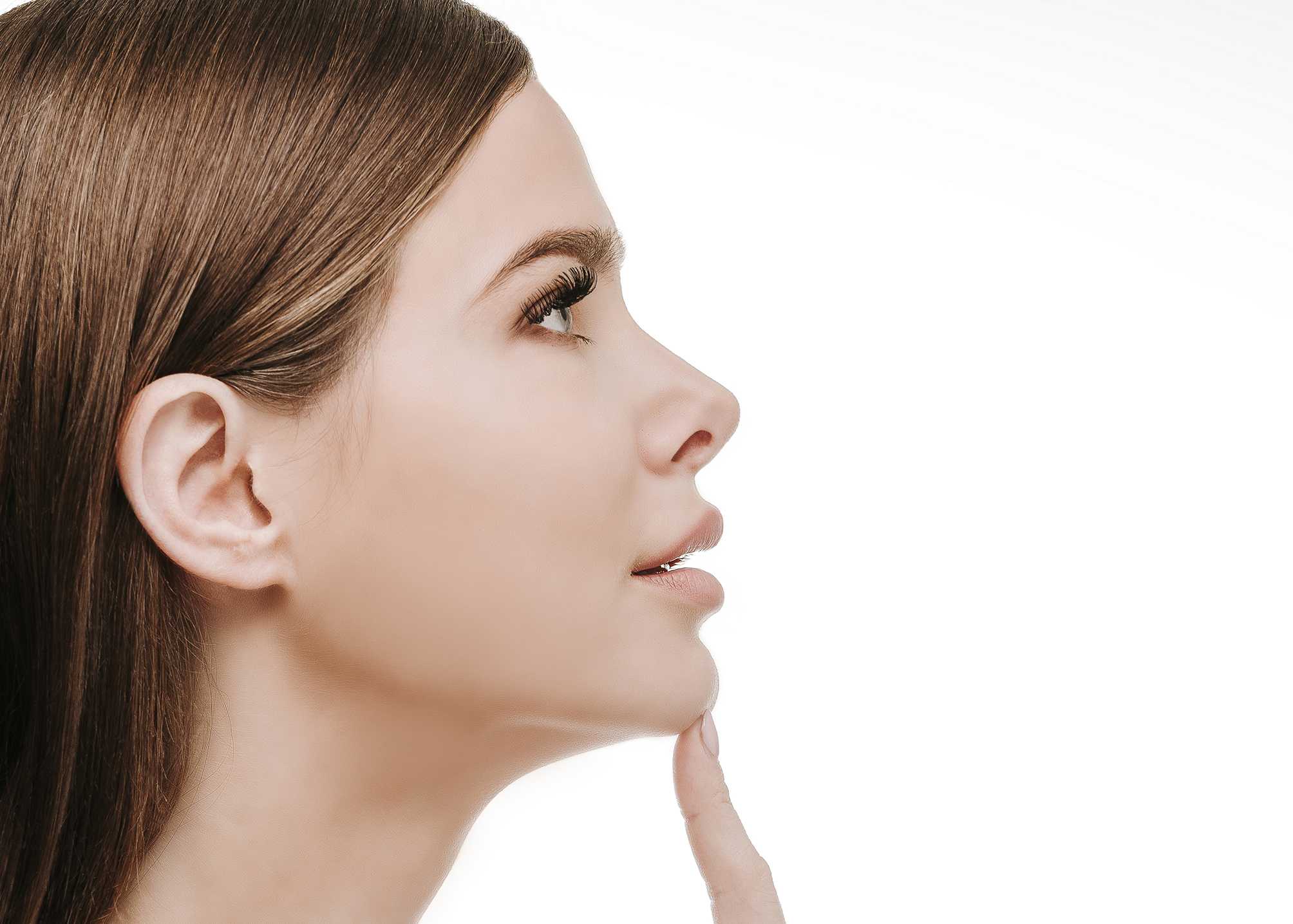
Asked which parts of someone’s face we pay attention to looking at another person, we’re likely to say we focus on the eyes, nose, mouth, hair, or even cheekbones. Looking at these parts, sometimes even unconsciously, we assess their attractiveness. Even though everyone may like a different appearance, a face looking at us with its big eyes, smiles with a full mouth and has prominent cheekbones and a small nose is the quickest to charm us. We fail to mention, on the other hand, because we most probably don’t realise it, we’ll be more attracted to a symmetrical face. Well cared-for faces with elastic skin, synonymous with youth, will be faster to draw our attention.
Has a beautiful face always been defined in the same way, though? It turns out the standards of beauty varied over the centuries. In ancient Egypt, fine features of a delicate face combined with strongly highlighted eyes were appreciated. A female face had to be pale in the Middle Ages, on the other hand. A light skin had been in value until the early 20th century, regarded as a sign of good social status. The face, like the rest of the body, was to be fuller during the Baroque. A stronger make-up was supposed to add attraction. What an ideal face should look like might be a subject for an extended discussion. It is ourselves, however, who will determine presentation of our face, which of its parts will be most attractive and what will be emphasised. Let us also remember some anatomical features one community finds attractive may prove uninteresting to other cultures and without importance to our beauty. It can be said by way of summary it is the most important to feel well and beautiful with our face that will reflect our personality. We don’t all have to be the same after all, while otherness or exoticism may be attractive as well.
What can plastic surgery change in our face?
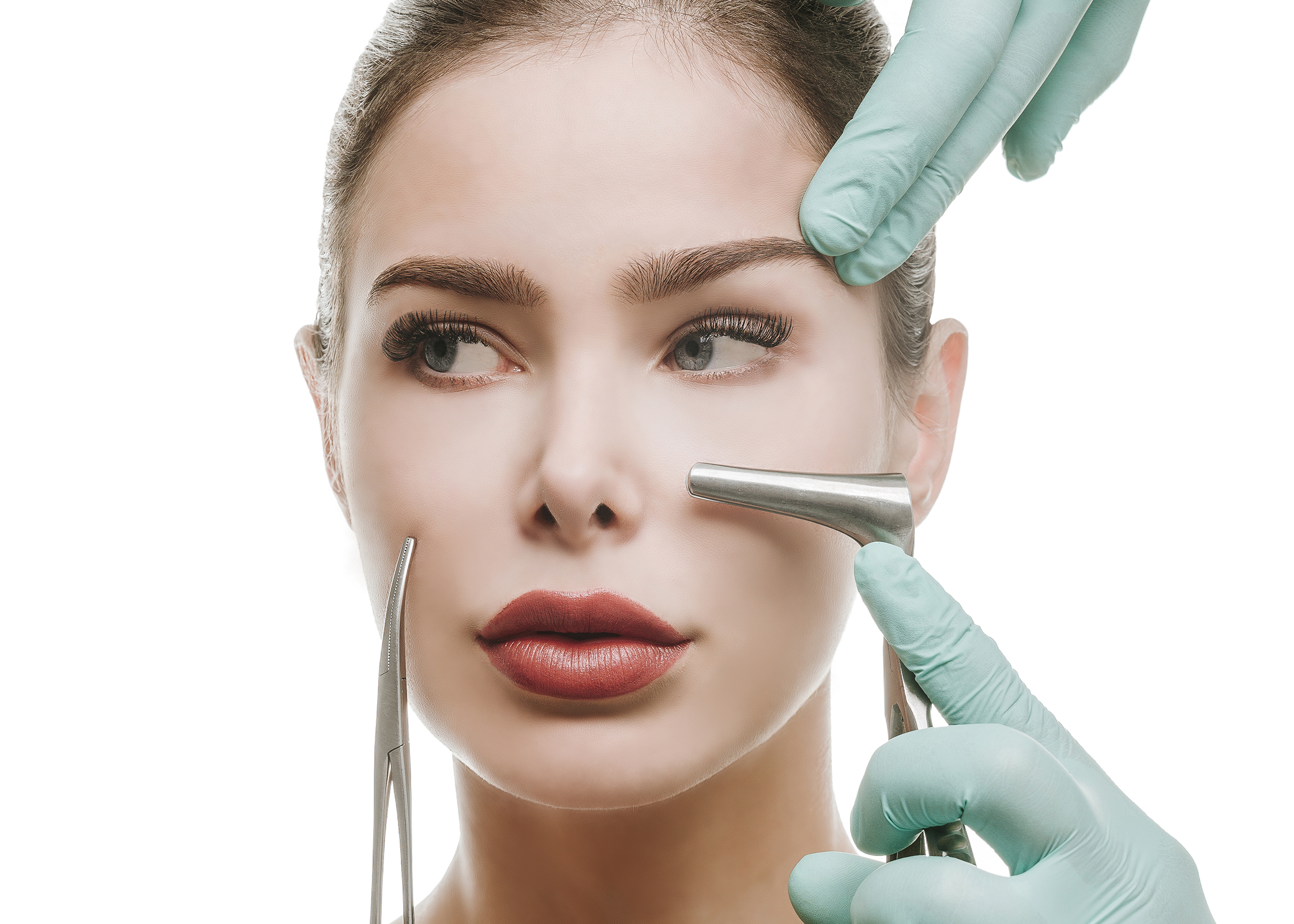
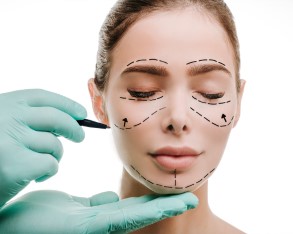
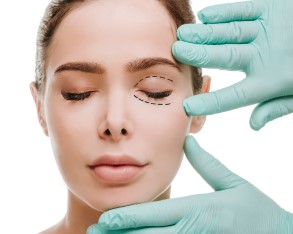
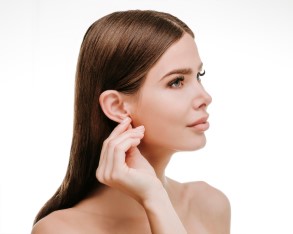
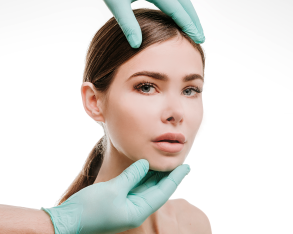
Since the face presents us to other people, most of us are anxious to make it look attractive. Its charm cannot always be enhanced with appropriately selected and regular care. Plastic surgery may be of assistance in such a case, which will emphasise the beauty of our face. If we’re unhappy about the shape or size of our earlobes that stick out, otoplasty will be of assistance. Losses of this part we may be born with or incur as a result of accidents can be remedied by ear reconstruction. An unattractive nose will acquire a desirable appearance thanks to surgery of the whole organ or just a correction to its tip. When we have problems breathing due to incorrect nose shape, a plastic surgery of the nasal septum is a good idea. Appearance of a face undermined by eyelid irregularities can be restored with surgeries of lower and upper lids that will involve, among other things, removal of redundant and flaccid skin. A lid that fails to properly adhere to an eyeball can be corrected by unfolding. Lifting of the whole face or of brows and the forehead may clearly rejuvenate them. Lipofilling, or face shaping with your own fat, may produce less deep wrinkles, enhance cheeks or improve skin flexibility.
Plastic procedures on a face bring spectacular effects. It gets younger, more attractive and shiny. The facial skin becomes visibly tight and its wrinkles are reduced or removed. Irregularly shaped or damaged facial areas regain their proper anatomical shape, with their functionality restored.
Facial procedures not only highlight the beauty of our faces but also improve our self-confidence and the impression we make on others. A distinctly rejuvenated face will make our life easier, both privately and professionally.